Build the Line
Jeff Uren ★ 2026-04-27
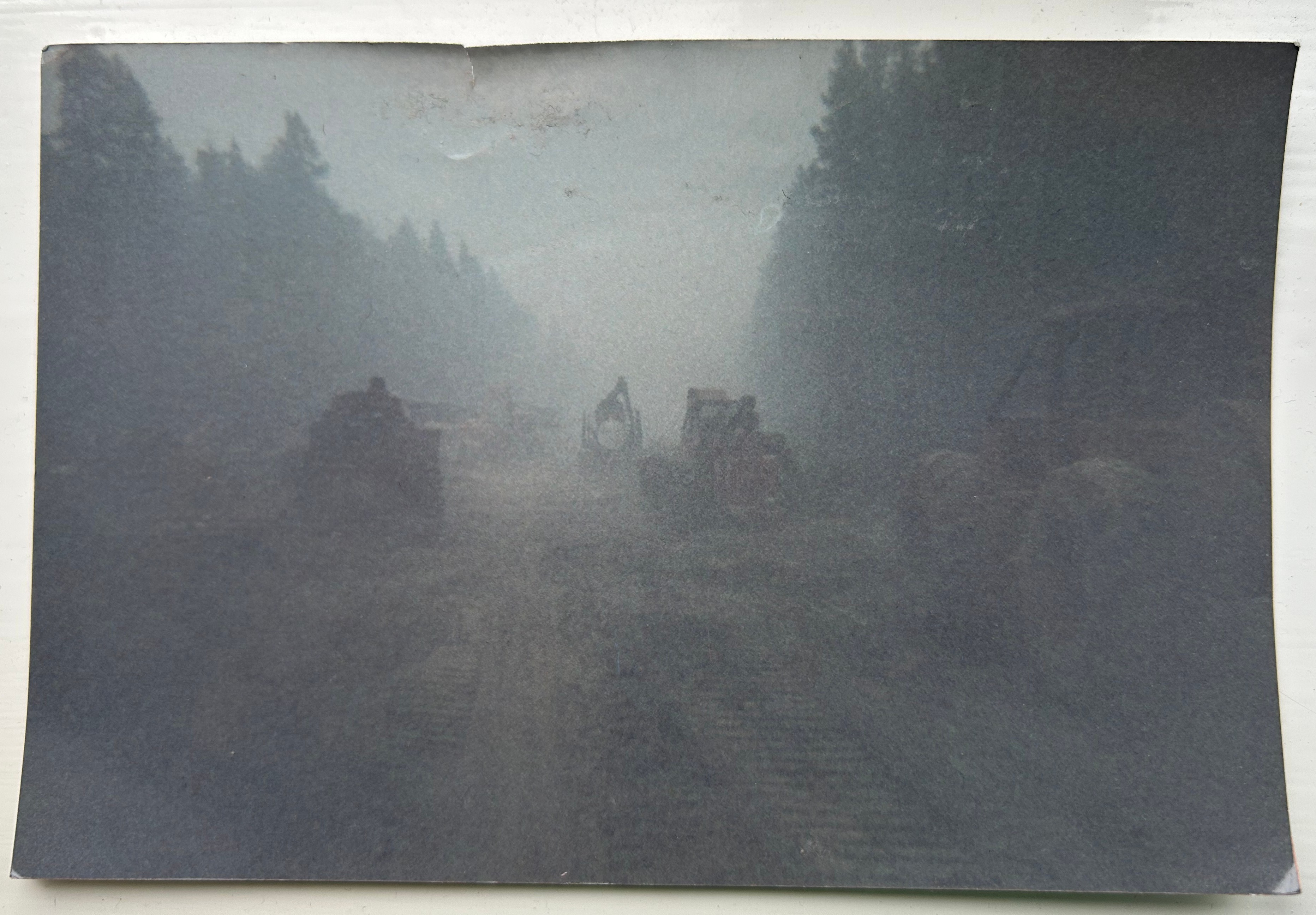
I've been thinking a lot about when I was younger, working for the M.N.R. In Canada. Thinking about Wildfire Crews. Wildfire crews and quality.
Wildfire doesn't have some perfect system. Anyone who has worked in the bush knows that half the time things are held together with old habits, tired people, borrowed tools, bad coffee, and somebody saying "Ah, give it another kick and it'll go."
A fire doesn't care how clever you are. It also doesn't care what the plan looked like at 6AM that morning. By 2PM the wind will have changed, the hose will kink or split somewhere a few kilometres back, the pump won't have enough oomf to push water up the hill anymore, or it'll shift and suck mud, coughing out. The chopper will be off somewhere else with the bambi bucket, the next crew over will only speak French over the radio, and the nice clean shape on the map where your edge of the fire is will become a nasty looking thing with teeth.
Nobody really "puts out" a fire anyway, at least not in the way that people fantasize about it.
You work around it. Read it. You cut line where the line might hold. You burn what it might use later. You move water. You move people. You try to keep the thing inside some imaginary, constantly shifting boundary just long enough for weather, fuel starvation, and luck to line up.
Sometimes it's crews with hand tools, a water bomber or two, some bulldozers and skidders. Or it's a person standing in wet ash, staring at a bit of smoke coming out of the ground in the dark at the end of a long day trying to decide if it's nothing, or tomorrow's problem.
Good ones know enough to be bothered by small things. Maybe that's the right trick.
A little smoke matters. A dull axe matters. A radio that sort of works, is a radio that doesn't work. A tired person saying they're fine isn't information. A crew that's stopped talking is information. A plan no one believes in is information.
You learn to pay attention. In the ordinary, grubby, practical sense. You pay attention because a wild boreal forest punishes distraction. It punishes pretending. It punishes the person who thinks being in charge is the same as situational awareness.
Living together, eating, stinking, arguing together, and working together.
It sounds romantic if you haven't done it.
Mostly, it's uncomfortable. Wet boots. Black hands. Bugs. Smoke in your throat and up your nose. Ash in your gums. A dull ache from carrying hose through slash and fighting with alder swail. Pine beetles everywhere. You chain smoke, only to keep the black flies off you. It's a misery waking up in a tent that's damp from your own breathing, knowing your socks are still wet, or crusted with mud before the days even started.
It's decent work though, when it's shared work.
No ones too important to carry a hose. No ones too junior to notice something is wrong. A Crew-boss has done Crew-member work, a Crew-leader has done Crew-boss work. The people making decisions, at some point, had the same weight slung on their backs.
It's one thing to be told what to do by someone who has only ever seen the work through a manual and some operating procedures. It's another to be told by someone who knows exactly how heavy the hose pack is, or how much it hurts having a pump backing board slam you in the hipbone repeatedly, and asks you to do it anyway, because the work needs doing.
Once fires reach a certain size, they generally get assigned an Incident Command whose responsible for the big picture stuff.
They're not everywhere all the time, that's physically (and mentally) impossible. They're up in the air, on the radio, looking at maps, weather, crews, aircraft, fuel, roads, lakes, edges, gaps. They're back at base coordinating resources to support crews on the ground. They're constantly trying to understand the shape of the whole thing, without losing sight of the people inside it.
A good IC wants accurate information. A bad one wants obedience.
Accurate information is brittle. People will hide things if they think every problem comes back as blame. They'll stay quiet about bad tools, bad calls, fatigue, and beefs between people. The map can look cleaner than the ground actually is.
Good leads check in without theatrics. Just enough. How's the line? How's the pump? Do you have enough gas? Crew ok? Anyone limping? Bears spotted nearby. Is anyone too quiet? Do you have what you need? What are you seeing that i'm not?
Sometimes the best command isn't command at all.
Sometimes its dry socks. Food drops. A pump part. An updated map. A decision made early enough that the people below it don't have to pay for the delay. Sometimes it's leaving a crew alone because they know their piece of ground better than anyone else.
At night, people tell stories, which matters more than it sounds like it should.
Old fires. Bad fires. Lucky fires. The one where the wind turned. The one about chasing a smoke for five kilometres by smell alone. The bear story, the year they had shit tents, the time someone should have said something earlier, and didn't.
The stories carry part of the work that doesn't fit neatly into training. Training matters, standards matter, drills matter, pack walks matter. Knowing how to take apart a Wajax pump matters. Knowing where you left the first aid kit matters.
The rest travels through people. It sits in the tone of a voice, in hesitation, in the way an old hand looks at a tree line and doesn't like it. It's in the little phrase "I'd keep an eye on that" which on the right lips, speaks volumes.
Sometimes support ain't noble or complicated.
It's breakfast, hot food at the end of the day. Dry socks. A tent that keeps water out. Boots that fit. Gloves without holes. A radio that works. Pay that means the person holding the pulaski is not lying awake wondering how rent gets covered when the season ends.
People like to talk about resilience as if it's some private virtue, as if some people simply have more of it, like height or eye colour. Some people mistake reading about consequence for having met it.
Resilience can be supplied. It comes from food, rest, training, education, money, trust, and decent equipment. It comes from knowing that if you say you're hurt, someone will believe you. From knowing that if the work is hard, the people above you have not mistaken hardship for character-building.
Understanding consequences you can only learn from having to live with the outcomes of your decisions. From getting smacked in the mouth by life once in a while.
You can ask a lot from people. People will give a lot, especially when the work matters, and they're allowed to have pride in the work.
But you can't keep drawing from an empty camp, and a system that needs people to be brave all the time has probably been designed by someone whose never had to be brave themselves.
Fire crews aren't efficient in the tidy sense. Nobody looking at a line of filthy people eating their lunch, next to a wailing pump sluicing water out of a stinking bog would mistake it for a cleanly operating machine.
Too tired. Too weather-dependent. Too full of jokes, mistakes, grudges, rituals, stubbornness, and luck.
When it works, it works because the human part hasn't been designed out of it. Its been accounted for. That's hard to do. But it's probably the thing most worth learning.
Quality is a weird thing.
_ J